If you’ve been sitting in the project meetings, by now, you will know this scene well. Everyone around the table is talking in numbers. ‘Tons per hour’, ‘bar’ and ‘we will keep a margin just to be safe.’ Heads nod, drawings are signed, and the project moves ahead.
A year later, the same plant starts complaining: gas bills are too high, burners keep cycling, steam is wet, and production keeps getting interrupted.
In our 20+ years of experience, working with industrial plants across Pakistan, the root cause is usually the same: ‘The steam system was not planned with the right questions.’
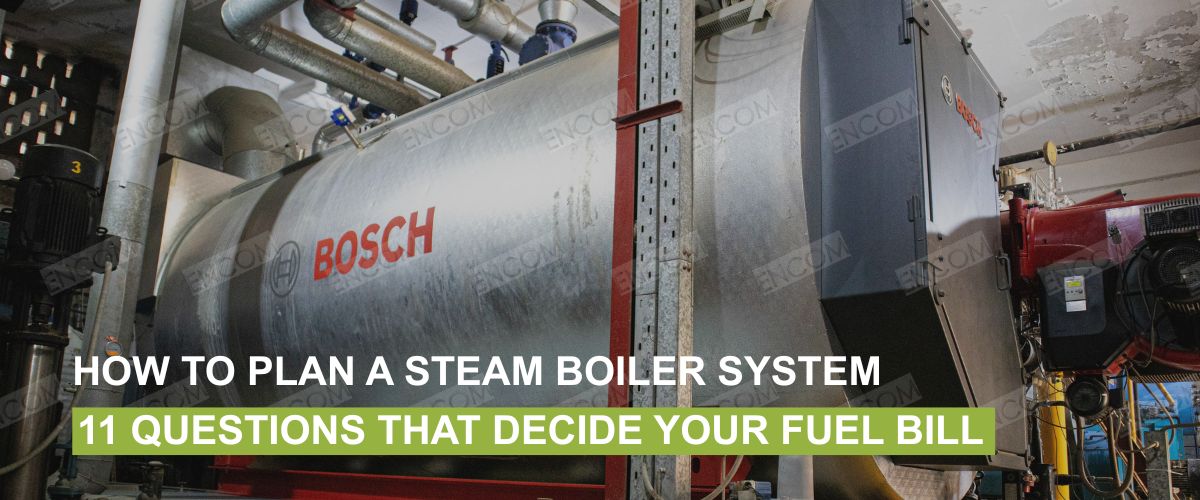
At Encom, we have used Bosch’s Planning Guide for Steam Boiler Systems for many years and adapted it to local conditions. Let us walk you through the 11 questions we now ask in every serious boiler discussion. If you are planning a new boiler or a major change, this is the mindset that protects your fuel bill for the next 10 to 15 years.
1. Steam pressure: Are you stacking safety on safety?
Bosch starts with a blunt question: Have you added unnecessary safety margins to your operating pressure?
Your average operating pressure should reflect what your process truly needs. The higher ‘safety’ level belongs in the maximum permissible pressure and in safety devices, not in everyday setpoints.
In Pakistan, we often see lines that can run happily at 8 bar being fed with 12 or 13 bar ‘for flexibility.’ That extra pressure means thicker materials, higher cost and more heat loss. In many plants, we have dropped setpoints by 1 to 3 bar with zero impact on production and a clear gain in efficiency.
It is worth asking yourself: what is the minimum pressure your most critical consumer really needs, and is every extra bar genuine, or just habit?
2. Steam demand: Have you actually done a consumption analysis?
This is the most common shortcut.
Bosch simply asks: Have you considered all consumers, including internal boiler house use and losses, and have you done a proper consumption analysis with simultaneity of loads?
Many plants still size steam systems on installed equipment capacity plus a generous safety factor. That is how you end up with an oversized boiler that cycles all day, or a system that cannot hold pressure at peak.
The better approach is to map your consumers and look at minimum, normal and peak loads. Check if you can stagger start ups, and how the load would be shared if you had two or three boilers instead of one large unit. When we do this exercise with clients, oversizing and cycling often disappear on paper before the project even starts.
3. Steam quality: Is ‘generic steam’ really enough?
Bosch asks if your steam needs specific properties such as low residual moisture, food contact suitability, or superheating.
In practice, that means:
- Do some processes need very dry steam?
- Do you have food or pharma applications?
- Does any consumer require superheated rather than saturated steam?
In many local plants, one pressure level and one ‘generic’ steam quality are expected to serve everything. The result is compromise. Some equipment is fine, some lives with wet steam, and operators keep turning up pressure to mask design issues. When we discuss this upfront, the solution is often simple: a small change in distribution or conditioning instead of a lifetime of poor steam.
4. Water and condensate: Do you really know what is in your boiler?
Water and condensate strategy is one of the biggest ROI areas we’ve seen.
Bosch highlights seasonal changes in raw water, correct choice between softening and RO, deaeration level, condensate return, and the risk of contamination.
In Pakistan:
- Bore water quality can swing with the seasons. One old lab report is not enough.
- Many boilers run with little condensate return, even with high gas prices. Every ton of hot condensate you dump is fuel you buy again.
- In textile and food plants, leaking heat exchangers can quietly contaminate condensate with oil or product.
A solid water and condensate concept, with the right treatment and monitoring, pays back fast through lower blowdown, fewer tube failures and better efficiency. This is an area where Encom’s OEM training and field experience often change the long-term cost curve for a plant.
5. Fuel: Do you understand your real gas and oil situation?
Paper and reality can be very different.
Bosch asks which fuels are available, what the quality range is, whether gas flow pressure has been checked at the burner skid, and whether any heavy or viscous fuels need special handling.
We often see gas pressure assumed from the contract, not measured at the boiler. Dual fuel burners are installed, but the heavy oil system is not fully thought through. There is no clear plan for gas curtailment periods.
If you ignore actual flow pressure and cumulative pressure drops between gas station and burner, you invite burner trips and failure to reach full output. A few field checks during planning can avoid a lot of frustration later.
6. Efficiency: What payback will your management accept?
Almost every board says ‘efficiency is important.’ Very few write down an acceptable payback period.
Bosch asks: How important is energy efficiency, and what is the maximum amortisation time for efficiency measures?
Once you agree that, for example, a two or three year payback is acceptable, decisions on economisers, heat recovery and condensate systems become much easier. You select the right modules upfront instead of adding them in a panic after the first gas bills. At Encom, we often act as a translator between technical teams and management on this point, turning efficiency ideas into a clear ROI story.
7. Operator: Who will actually run this system?
Boiler designs sometimes assume a level of staffing and expertise that plants do not have.
Bosch pushes you to think about security of supply, redundancy, future load growth, operator qualification, and needed automation.
In many Pakistani plants, expectations from the boiler are very high, but trained staff is limited. That is where proper automation, clear operating concepts and remote monitoring become essential. When we design systems, we always link technical choices to the reality of the people who will stand in front of the panel at 3 a.m.
8 – 10. Location, boiler house and piping: Is the physical reality on your side?
The guide then moves to the physical environment:
- Is the site coastal, with higher corrosion risk? Is it in a seismic zone?
- Is the boiler house designed for safe and easy operation, with proper foundations, access, air supply and emergency stops?
- Can your pipework support pressure, flow and safety with correct slopes, line sizes, supports and materials?
In places like Hub or the Karachi coast, corrosion exposure is very different from inland Faisalabad. We have seen boiler houses where you cannot remove the boiler without breaking walls, and steam lines that invite water hammer from day one. Fixing these after commissioning always costs more than planning them properly. This is where an experienced partner’s checklists really help.
11. Legislation: Are you ahead of compliance?
Finally, Bosch focuses on rules and regulations.
You need to identify all applicable standards early, understand emission and environmental requirements, and map the approvals, inspections and operator obligations. In Pakistan, that means aligning with boiler inspectorates, environmental authorities and your own EHS standards before equipment is finalized, not when it reaches the port.
Plants that treat compliance as part of design, rather than an afterthought, avoid delays, penalties and rework. They also sleep better.
Your next move
If you are planning a new steam boiler system or a major upgrade, these 11 questions form a practical checklist. They protect your fuel bill, your uptime and your compliance record.
At Encom Pakistan, we use an internal version of the Bosch planning forms, tuned to Pakistani fuel realities, water conditions and regulations. Over two decades, this framework has helped many plants avoid expensive mistakes.
If you would like to walk through these questions for your own site, reach out to Encom for a short planning discussion. Share your basic data, load profile and constraints, and we can help you uncover hidden risks and opportunities. For industrial heating, power and cooling, Encom Pakistan aims to be your trusted, German-backed partner from first concept to long-term operation.