
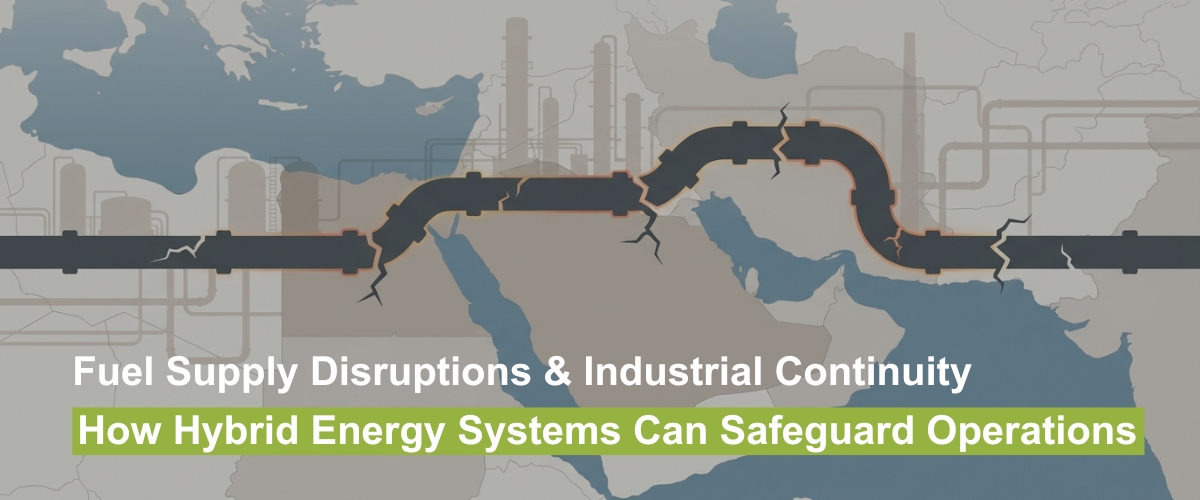
What happens when your plant is fully ready to run, orders are lined up, teams are on shift but gas pressure drops or supply gets cut without warning?
It is a situation many industries across Pakistan are facing today. Heating and cooling systems sit at the heart of operations, yet they rely heavily on a single, increasingly uncertain fuel source. When that source becomes unreliable, production does not just slow down, it stops. And every hour of downtime has a cost.
Over the years, we have seen one pattern clearly. Plants that depend on one fuel face the highest operational risk. Those that build flexibility into their systems stay ahead, even in uncertain conditions.
The Real Risk: Overdependence on Gas
Gas has long been the preferred fuel for industrial heating. It is clean, efficient, and easy to manage. But current geopolitical disruptions have exposed a critical gap. When supply becomes inconsistent, even the most efficient system cannot perform.
Consider a textile processing unit running steam boilers for dyeing operations. A sudden drop in gas pressure can halt the entire batch. Material gets wasted, delivery timelines slip, and energy efficiency drops because systems must restart repeatedly.
This is not a technical failure. It is a supply risk.
The question is no longer about efficiency alone. It is about continuity.
Moving Towards Energy Flexibility
To keep operations stable, plants need systems that can adapt. This is where hybrid energy solutions come into play.
A hybrid setup allows industries to switch between fuels or use alternative energy sources based on availability. Instead of relying solely on gas, plants can integrate options like biomass or liquid fuels into their systems.
For many, the move toward biomass is becoming a strategic necessity. External factors like global supply chain shifts and climate change are creating challenges that are essentially outside an organization’s control. Transitioning to biomass energy for industrial growth is a practical way to reclaim that control by utilizing local resources like rice husk or wood pellets.
Similarly, industries with access to organic waste find that these materials, often seen as waste, become a reliable fuel source. This not only reduces dependency on gas but also helps manage fuel costs more effectively.
Practical Solutions That Make a Difference
From what we see across industries, three approaches consistently help reduce downtime risk:
- Dual Fuel Systems
Burners designed to operate on both gas and oil give plants immediate flexibility. When one fuel becomes unavailable, the system continues to run on the other without major changes. We have seen how effectively the energy volatility can be beaten with dual fuel burners and how it can prevent business slowdowns by allowing for a seamless switch between gas and oil.
- Biomass Integration
For industries with access to organic waste, biomass offers a stable and cost-effective alternative. Modern systems are efficient, controlled, and compliant with environmental standards.
- Waste Heat Recovery
Many plants lose valuable energy through exhaust gases. Recovering this heat and reusing it reduces overall fuel demand, which in turn lowers exposure to supply disruptions.
Each of these solutions addresses a different part of the problem. Together, they create a system that is not just efficient, but resilient.
A Shift in How We Think About Energy
Traditionally, energy systems were designed for optimal performance under stable conditions. Today, the focus must shift toward adaptability.
We often work with plant teams who initially look for ways to improve efficiency. But the conversation quickly evolves. The real value lies in ensuring operations continue, even when conditions are not ideal.
For instance, a packaging plant we worked with had frequent shutdowns due to inconsistent gas supply. By integrating a dual fuel burner and optimizing their existing system, they reduced unplanned downtime significantly. The improvement was not just technical. It directly impacted their delivery commitments and overall profitability.
This is where engineering plays a larger role. It is not just about equipment selection. It is about designing systems that align with real-world challenges.
Building Continuity into Your Operations
Energy disruptions may not be in our control, but how we respond to them certainly is.
Hybrid energy systems offer a practical way forward. They reduce dependency, improve flexibility, and protect operations from sudden shocks. More importantly, they give decision-makers confidence that production will continue, regardless of external conditions.
At Encom Pakistan, we have spent over two decades working alongside industries to design and support such systems. From boilers and burners to complete energy solutions, our focus remains the same. We help plants operate reliably, efficiently, and without unnecessary risk.
If your operations depend on uninterrupted heating and cooling, it may be time to rethink how your energy systems are structured. The right approach today can prevent costly disruptions tomorrow. Reach out to us to see how we can build resilience into your plant’s future.